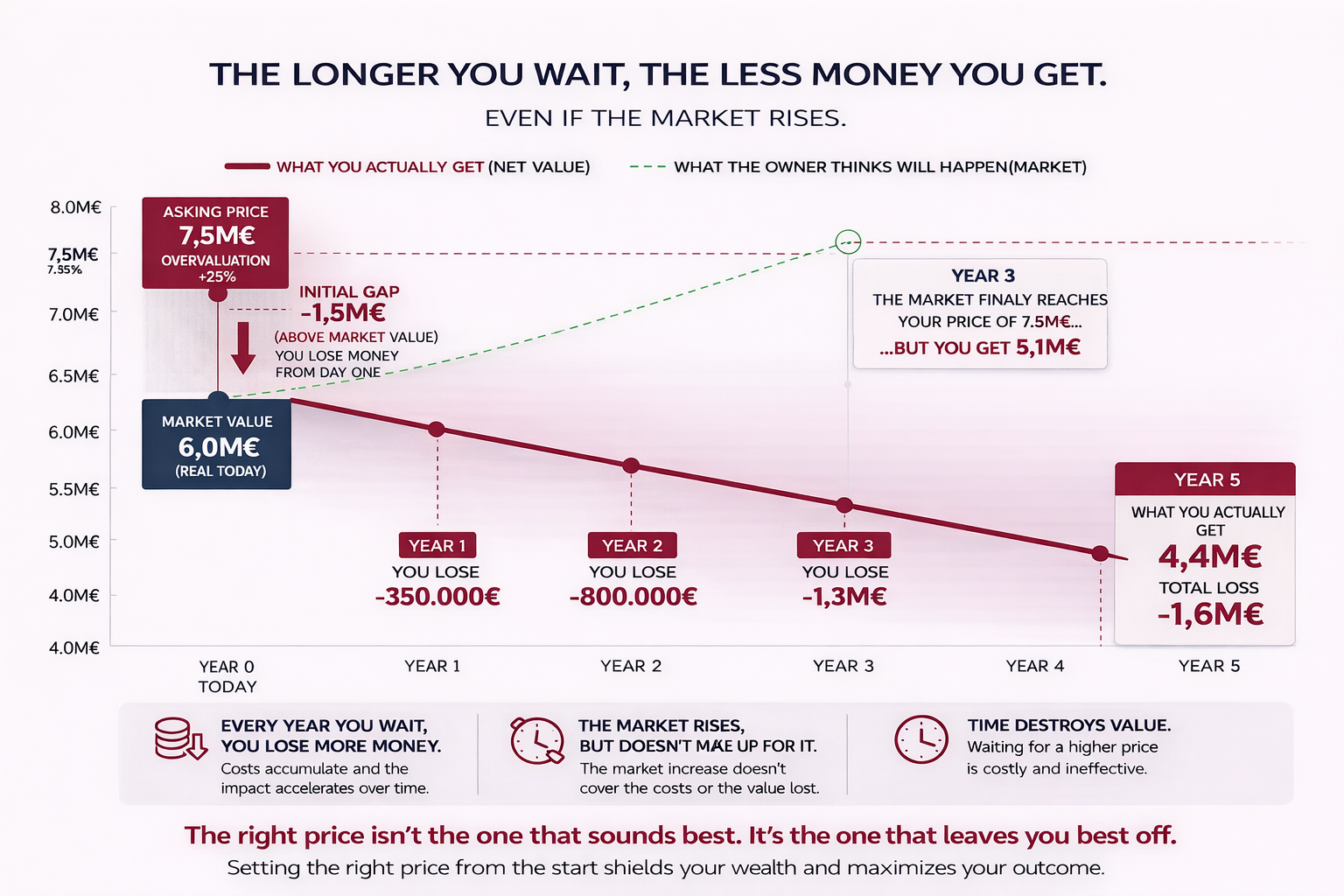
Overpricing a property can reduce what you actually walk away with, even in a rising market. If the property does not generate rental income, waiting is not neutral. In most cases, it quietly works against you. This is especially relevant in markets like Marbella and Benahavís, where many owners assume future price growth will compensate for an ambitious asking price. The reality is different.
Why overpricing a property can cost sellers money?
When a property is launched above its true market val-ue, five factors start working in parallel:
1. Market growth. Yes, prices may increase over time. This is often the reason behind overpricing. But it is on-ly one variable and not the most decisive one.
2.Holding costs. Owning a property comes with ongoing expenses, whether it is sold or not. Community fees, insurance, maintenance and upkeep continue every month. A realistic assumption is around 1.5% per year.
3. Inflation. Even if you achieve a higher price in the future, the real value of that money may be lower. Infla-tion reduces purchasing power over time, often as-sumed at around 2% annually.
4. Opportunity cost. The capital tied up in the property could be working elsewhere. Even a conservative return of 4% per year compounds over time, increasing the cost of waiting.
5. Property ageing. Properties lose relative appeal over time. Design trends evolve, competition improves, and even well-maintained homes can feel outdated. A rea-sonable estimate is around 1% per year.
While the market may rise, these factors ac-cumulate. The result is simple: overpricing does not protect value, it often reduces it. The right asking price is not the highest number a property could reach. It is the price that protects what you actually receive.