BRIDGING THE NEGOTIATION GAP: HOW PRICING SHAPES TODAY'S COSTA DEL SOL MARKET

While long-term value remains exceptionally strong on the Costa del Sol. the market has reached a stage where seller expectations are drifting from buyer reality. Our latest data confirms that serious, informed buyers are still active but increasingly selective. This shift has widened the "Negotiation Gap," the space between the advertised asking price and the final closing price, now the key factor affecting liquidity and sales speed in the luxury segment.

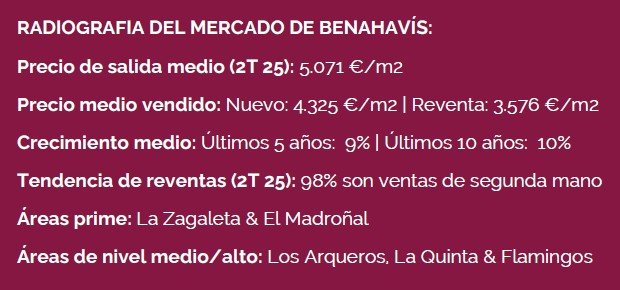
1. The Excessive Gap: Expectations vs Market Value. The divergence between the Asking Price and the Closed Price (Land Registry) is the main reason transactions are slowing. The figures are striking: in Benahavis, the negotiation gap stands at 36%, equivalent to €1,341 per square meter, Marbella follows at 31% (€1,239/m2) and Estepona at 28%. These differences clearly show that many homes enter the market with asking prices buyers simply reject.
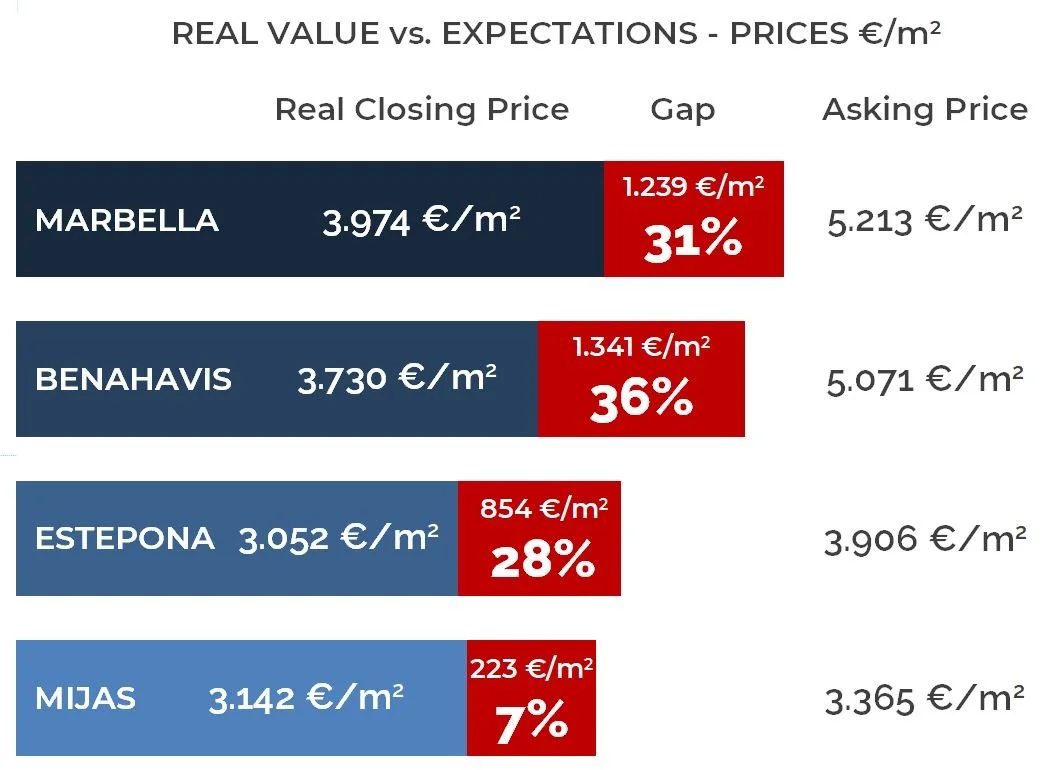
2. Market Friction and a Slower Sales Pace. This widening gap has led to a noticeable slowdown. Closed transactions in Marbella, Benahavís, and Mijas dropped by around 20% in Q2 2025 compared with the previous year. Marbella alone saw a 20.9% decline in units sold versus Q2 2024. Overpriced listings remain longer on the market. eroding buyer confidence and reducing overall momentum. The result is a cycle of inefficiency that slows the entire market.

3. The Solution: Price Coherence Protects Value. To reverse this trend, sellers must embrace realistic pricing from the start. Overpricing weakens negotiating power and often leads to harder final discounts. By contrast. properties priced in line with real demand attract serious buyers quickly and close closer to their asking value. A coherent valuation is not just a recommendation - it's a vital strategy to ensure a swift, secure sale and protect your capital.

In summary, demand remains robust and long-term fundamentals are strong, but achieving success today requires strategic, marketcoherent pricing that bridges the growing negotiation gap.

THE TRUTH ABOUT RESALE VALUE IN BENAHAVÍS: PRESTIGE VS. MARKET REALITY

Benahavís, the jewel in the hills of the Costa del Sol and part of the Golden Triangle with Marbella and Estepona, combines prestige with the highest income per capita in Andalusia. Yet behind its reputation lies a more nuanced reality regarding resale value and liquidity.

1. Supply: Scarcity as a Safeguard. Limited new development continues to support prices. Strict planning rules and a shortage of available land - especially for apartments concentrated in Real de La Quinta - keep supply tight. In past cycles, new builds made up 70 % of sales; during the last five years they averaged 10 %, reaching a record low of only 2 % in 2025.

2. Cooling Signs: The Gap Between Asking and Achieved Prices. In Benahavís, price data often reflects asking rather than actual sale values, creating false expectations among sellers. Over the past twelve months, the average gap reached 31.4%, while transactions fell around 20% in Q2 compared with the same quarter of 2024 - usually the most active of the year. The figures reveal growing market caution, where achieving premium prices requires realistic valuation and top presentation standards.

3. Liquidity: Patience Required. Prime properties may achieve 7,000–9,000 €/m², yet finding the right buyer can take time. The luxury and ultra-luxury markets rely on a smaller, more selective pool. For mid-high-end homes, realistic pricing is essential to avoid long market exposure.

4. What Protects Resale Value

  • Location: sea views, south orientation, or proximity to golf.

  • Condition: renovated, modernized homes sell faster and closer to asking.

  • Exclusivity: gated privacy remains a premium.

  • Market Positioning: villas 1.5 – 4 M€ and 250 - 750 k€ apartments attract steady demand.

5. Takeaways for Buyers and Sellers

  • Buyers: resale homes offer immediate availability; scarcity of new builds supports long-term security.

  • Sellers: premium pricing applies only to properties in excellent condition— overpricing risks extended exposure and weaker negotiation power.

In summary, Benahavís remains one of the Costa del Sol’s most secure investment markets. Scarcity, global demand, and lifestyle appeal sustain values—but success depends on realistic price expectations and quality.

Article by

Alfonso Lacruz

COSTA DEL SOL REAL ESTATE MARKET Q2 2025: FEWER SALES, STABLE PRICES

The latest Land Registry data for the western Costa del Sol pre-sents a market that remains funda-mentally healthy but has clearly shifted in pace. Prices continue to trend upward, yet transaction vol-umes have dropped noticeably com-pared with the same period last year. After two exceptional years of strong activity, this moderation suggests the market is returning to a more sus-tainable rhythm rather than entering a downturn. Serious buyers are still active, but they are increasingly se-lective and value-driven, focusing on properties that combine quality, loca-tion, and realistic pricing.

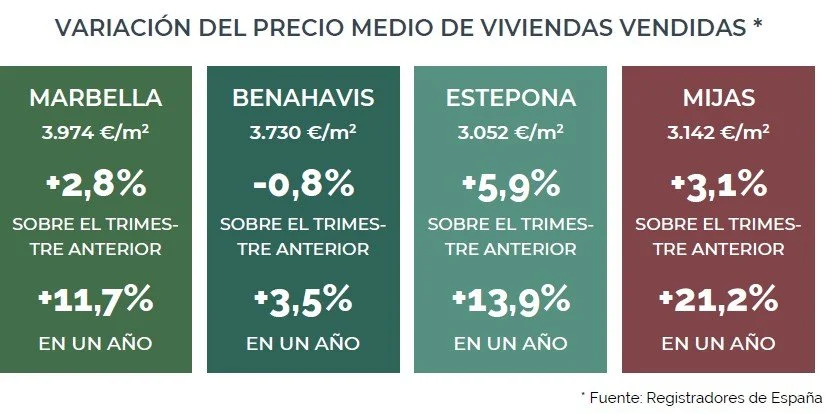
1. Sales volumes have fallen sharply, but prices remain resilient. Closed transactions decreased by around 20% in Marbella, Benahavís, and Mijas during Q2, while Estepona was the only area to post a modest gain of +3.6%. Despite these declines, prices have continued to rise across most municipalities. This resilience highlights the strength of the local market, sup-ported by limited supply of modern homes and con-sistent demand from both domestic and international buyers.

2. Price trends di-verge across areas. Marbella and Estepona recorded quarterly price gains of +2.8% and +5.9%, while Mijas led the region with an impres-sive +21.2% annual increase. Bena-havís was the only market to show a small quarterly de-crease (–0.8%), suggesting a temporary pause after several years of growth, particu-larly in the high-end segment where buyer caution is more evident.

3. The gap between asking and sell-ing prices continues to widen. Since mid-2024, asking prices have risen faster than achieved sale prices, reflecting a growing disconnect be-tween seller expectations and buyer sentiment. While this may lead to longer marketing times, well-priced listings continue to attract strong interest, confirming that confidence in the Costa del Sol remains solid and long-term fundamentals are intact.

For homeowners, this means:

Well-priced homes will stand out this autumn, as buyers grow more selective and mo-tivated — making now the ideal moment to attract seri-ous offers before year-end.

Article by

Alfonso Lacruz

LA VERDAD SOBRE EL VALOR DE REVENTA EN BENAHAVÍS: PRESTIGIO FRENTE A REALIDAD DEL MERCADO

Benahavís, la joya de la Costa del Sol y parte del Triángu-lo de Oro junto a Marbella y Estepona, combina presti-gio, exclusividad y la renta per cápita más alta de Andalucía. Su reputación como destino residencial de lujo está consoli-dada, pero conviene analizar la realidad del mercado en cuanto a valor de reventa y liquidez.

1. Oferta: la escasez es la defensa del valor. La falta de obra nueva sigue sosteniendo los precios. El urbanismo y la escasez de suelo - especialmente para apartamentos, don-de prácticamente solo queda suelo en Real de La Quinta - limitan la oferta. En el ciclo de 2008 la obra nueva represen-taba el 70 % de las ventas; en los últimos cinco años apenas el 10 %, alcanzando un mínimo del 2 % en 2025.

2. Señales de enfriamiento: la brecha entre precio de ofer-ta y cierre. Los datos publicados de precios reflejan a me-nudo expectativas, no valores reales, generando falsas es-peranzas entre los vendedores. En los últimos doce meses, la diferencia media entre precio de salida y cierre fue del 31,4%, mientras las ventas bajaron un 20% en el segundo trimestre respecto a 2024, tradicionalmente el más activo. El mercado exige mayor realismo: alcanzar precios premium requiere un valor ajustado y una presentación impecable.

3. Liquidez: paciencia y estrategia. Las propiedades de alta gama alcanzan entre 7.000 y 9.000 €/m², pero pueden tar-dar en venderse por el reducido grupo de compradores potenciales. En el rango medio-alto, ajustar el precio al mer-cado evita que una venta se alargue y pérdida de atractivo.

4. Factores que protegen el valor de reventa:

  • Ubicación: vistas abiertas al mar, orientación sur o cerca-nía a campos de golf.

  • Estado: viviendas renovadas o modernizadas se venden antes y más cerca del precio de salida.

  • Exclusividad: la privacidad en comunidades cerradas si-gue siendo un valor premium.

  • Posicionamiento: villas entre 1,5 y 4 M€ y apartamentos entre 250 y 750 k€ mantienen demanda constante.

5. Claves para compradores y vendedores:

  • Compradores: la falta de obra nueva re-fuerza el valor a largo plazo de las reventas.

  • Vendedores: los precios premium solo se logran con propiedades en excelente estado; precios caros implican más tiempo en el mercado y menor capacidad de negociación.

En resumen, Benahavís sigue siendo uno de los mercados más sólidos y seguros de la Costa del Sol. La escasez, la demanda y su estilo de vida sostienen los valores, aunque el éxito depende cada vez más de la realidad del precio, la calidad y la estrategia de venta

Artículo de

Alfonso Lacruz

MERCADO INMOBILIARIO DE LA COSTA DEL SOL: BAJAN LAS VENTAS, LOS PRECIOS SE MANTIENEN ESTABLES

Los últimos datos del Registro de la Propiedad reflejan un mercado que sigue mostrando solidez, aunque

con un ritmo más lento. Los precios continúan al alza, pero el número de compraventas ha caído de forma notable respecto al mismo periodo del año anterior. Tras dos ejercicios de gran actividad, esta moderación parece más un ajuste natural que una corrección. Los compradores siguen activos, aunque cada vez son más selectivos y valoran la calidad, la ubicación y, sobre todo, un precio coherente con el mercado actual.

1. Las ventas caen con fuerza, pero los precios se mantienen firmes. Durante el segundo trimestre, las

operaciones cerradas descendieron alrededor de un 20% en Marbella, Benahavís y Mijas, mientras que Estepona fue la única zona en registrar un leve incremento (+3,6%). A pesar de ello, los precios medios siguen mostrando una evolución positiva en la mayoría de municipios, lo que evidencia que la demanda

para viviendas bien presentadas y situadas en buenas ubicaciones continúa siendo sólida y estable.

2. Evolución desigual según la zona. Marbella y Estepona registraron aumentos trimestrales del +2,8% y +5,9%, respectivamente, mientras que Mijas lideró el crecimiento anual con un notable +21,2%. Benahavís

fue la excepción, con un ligero descenso (–0,8%) que apunta más a una pausa técnica tras varios años de fuerte apreciación, sobretodo en el segmento de lujo, donde el comprador se muestra más analítico y paciente.

3. Aumenta la brecha entre precio de oferta y precio de cierre. Desde mediados de 2024, los precios de

salida han crecido más rápido que los precios finales de venta, reflejando una mayor cautela entre los compradores y una cierta rigidez entre los vendedores. Aun así, las viviendas correctamente valoradas siguen atrayendo interés real, confirmando que la confianza en la Costa del Sol se mantiene firme y con fundamentos sólidos a largo plazo

Para propietarios, significa: Las viviendas con un precio realista de mercado destacarán este otoño, cuando los compradores son más selectivos pero decididos, siendo un tiempo ideal para vender.

Artículo de

Alfonso Lacruz

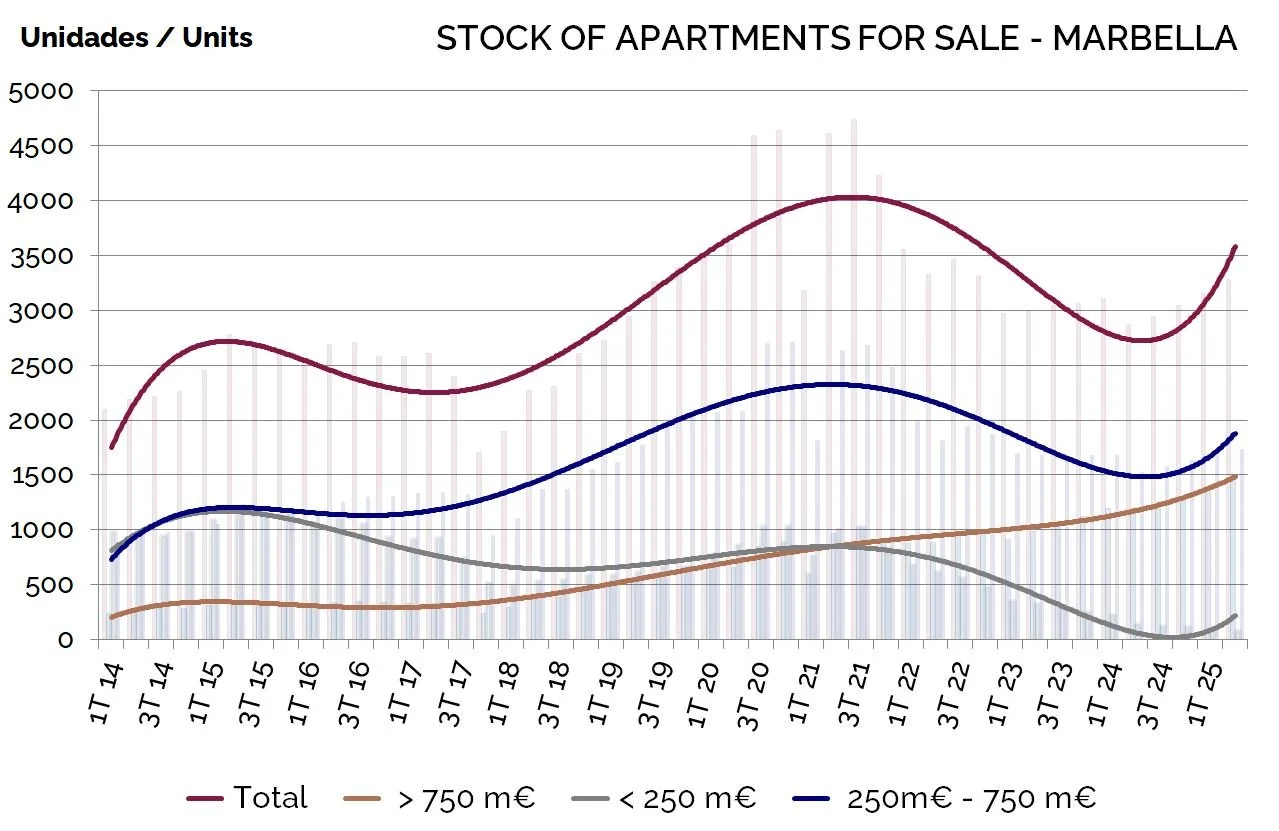
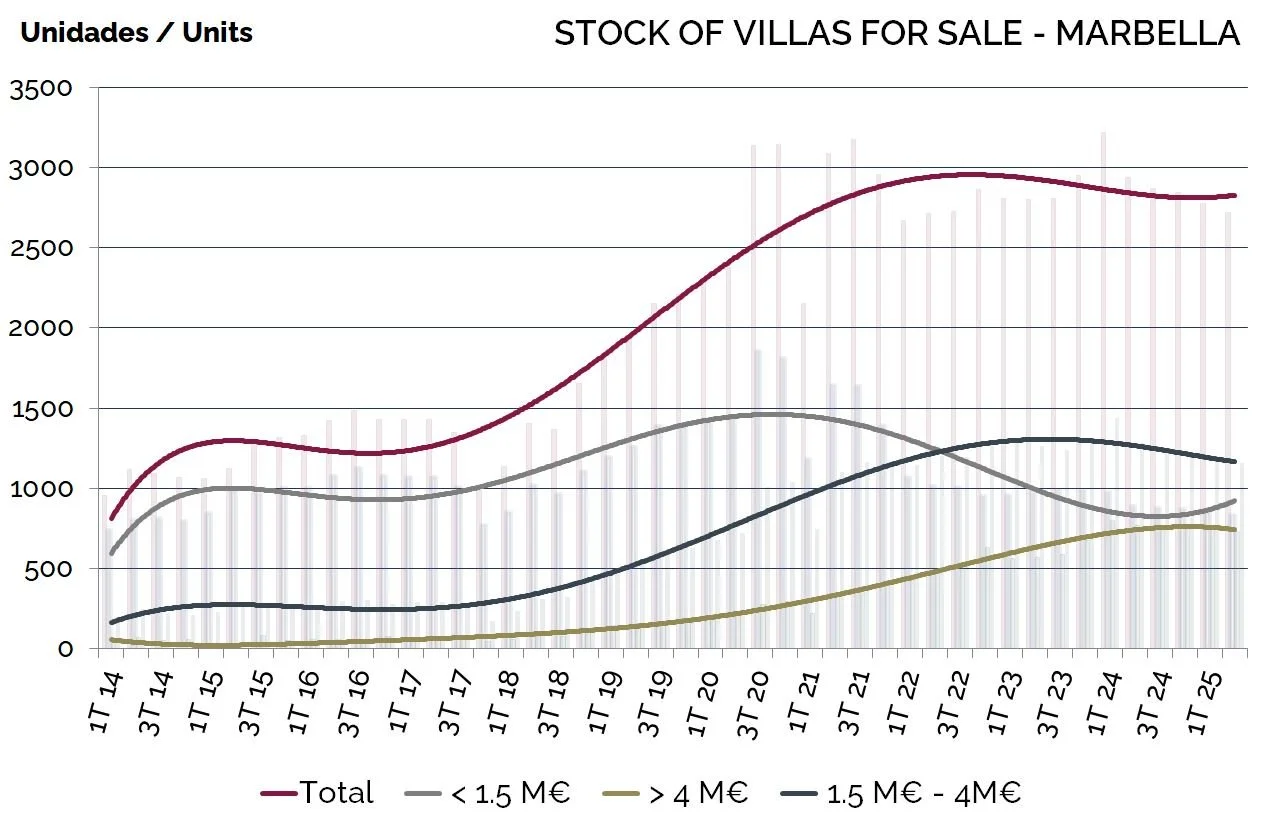
STOCK DE VIVIENDA EN MARBELLA & BENAHAVIS: DOS TENDENCIAS OPUESTAS

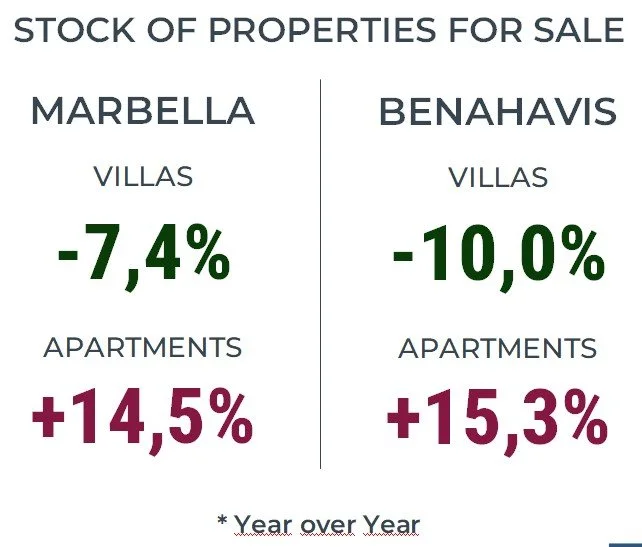
Al comenzar el último trimestre del año, el mercado inmobiliario de Marbella refleja dos realidades opuestas: escasez en villas y mayor oferta en apartamentos. Benahavís presenta un comportamiento similar, aunque Marbella muestra la visión más clara del conjunto.

1. Villas: Escasez de Oferta.

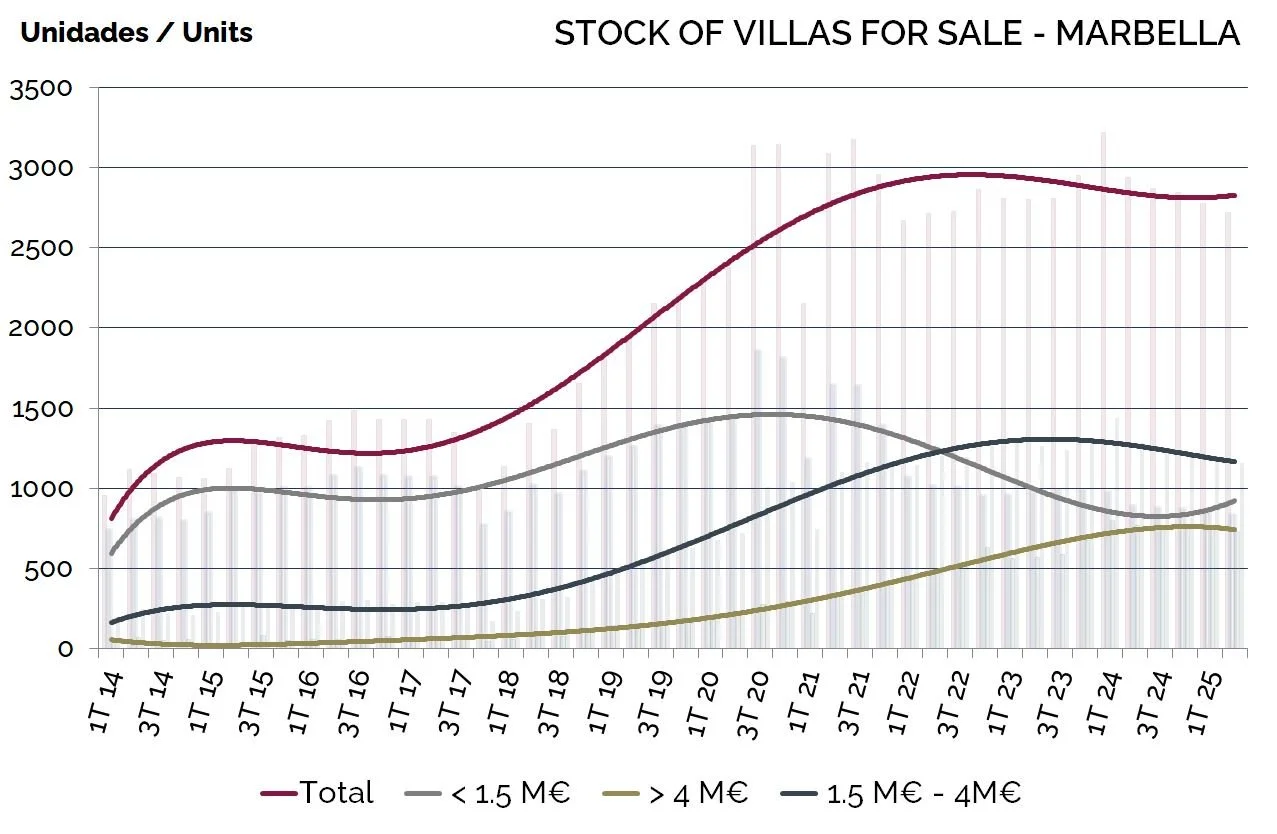
El inventario de villas ha bajado un –7,4% interanual, confirmando la limitada disponibilidad. La mayor caída se da en el rango de 1,5–4M€, en descenso desde 2022.

Por encima de 4M€, la oferta se mantiene estable, mientras que las villas más baratas, por debajo de 1,5M€, han bajado debido a la fuerte demanda y la falta de nuevas construcciones.

2. Apartamentos: Aumento del Inventario.

En contraste, los apartamentos han aumentado un +14,5% respecto al año pasado. El mayor crecimiento corresponde al rango 250–750K, que sigue siendo el más activo para compradores nacionales e internacionales. También destaca la gama alta, a partir de 750K, impulsada por proyectos modernos y compras asociadas al estilo de vida. En el nivel bajo, por debajo de 250K, la oferta sigue a la baja, confirmando la falta de opciones asequibles.

3. Polarización. El mercado se polariza

Villas cada vez más limitadas frente a un parque de apartamentos en expansión. La demanda sigue firme,

adaptándose a la oferta disponible en cada segmento.


Para propietarios, significa:

Villas: se benefician de la menor competencia, sobre todo en el rango 1,5M€–4M€.

Apartamentos: más competencia, pero las viviendas bien presentadas y con precio correcto siguen atrayendo compradores.

Compradores: las oportunidades en rangos bajos desaparecen, mientras aumenta la oferta en segmentos medios y altos.

Articulo de

Alfonso Lacruz

MARBELLA & BENAHAVIS MARKET INSIGHT: SUPPLY GAPS ACROSS PRICE RANGES

As we head into the last quarter of the year, Marbella’s real estate market reveals two contrasting stories: villas remain scarce, while apartments show increasing availability. Benahavís follows a similar trend, but Marbella offers the clearest picture.

 1. Villas: Declining Supply

Villa stock is down –7.4% year over year, reinforcing scarcity in the detached home segment. The steepest drop is in the 1.5–4M€ range, where supply has tightened since 2022. At the very top, above 4M€, inventory has stabilized, while entry-level villas under 1.5M€ are now limited due to strong demand and minimal new builds.

 2. Apartments: Rising Inventory.

In contrast, apartment stock has risen +14.5% compared with last year. Growth is strongest in the 250–750K€ segment, which remains highly active among both national and international buyers. High-end apartments above 750K€ are also expanding, supported by lifestyle demand and modern developments. At the same time, affordable options under 250K€ continue to shrink, reflecting how rare budget-friendly properties have become.

 3.  Diverging Dynamics.

The overall picture is one of polarization: scarcity in villas versus growing availability in apartments. Rather than a slowdown, demand is adjusting to value and supply across different price brackets.


For homeowners, this means:

· Villa sellers continue to benefit from limited competition, especially if positioned in the 1.5M€–4M€ range.

· Apartment owners will face more competition, but correctly priced and well-presented properties still attract significant buyer interest.

· Buyers should be aware that opportunities in the lower brackets are disappearing, while choice is increasing in mid-to-high-end apartments


ARTICLE BY
   ALFONSO LACRUZ 

Sustanaible Gardens

We design sustainable gardens based on environmental observation and the use of native, resilient plants. We apply Nature-Based Solutions (NbS) that replicate natural processes to address today’s social and environmental challenges.

CLIMATE-RESILIENT SPACES

Instead of using seasonal plants, we select species adapted to the local climate, such as Lavandula stoechas or Westringia fruticosa, which bloom at different times of the year, attract pollinators, and stimulate the senses. We avoid plants that may cause negative impacts, such as allergies or structural damage. Pest control is managed biologically, and we promote low-maintenance practices, avoiding unnecessary pruning. To reduce light pollution, we use amber lighting under 2700 Kelvin.

DROUGHT ADAPTATION

We replace grass with ground covers like Lippia nodiflora, which require minimal irrigation. Subsurface drip irrigation and organic or mineral mulching help retain moisture. Permeable surfaces and Sustainable Urban Drainage Systems (SUDs) are integrated into our designs to better manage drought and runoff. We choose low-water, climate-adapted plant communities that fit the existing soil with minimal amendments.

INVESTING IN NATURE IS INVESTING IN HEALTH

By planting species that attract pollinators, we create healthy spaces rich in ecosystem services: reducing CO₂, noise, and stress, improving social well-being, encouraging mental health, and strengthening our connection to nature.

ROSA CEÑO

LANDSCAPE DESIGNER

Master in Historic Gardens and Ecosystem Services of Green Infrastructure (UPM). Creator of projects such as El Jardín de los Sentidos (Marbella).

Awards include:

OJA AMJA First Prize and De-sign Week Marbella 2021.

Jardines Sostenibles

Diseñamos jardines sostenibles desde la observación del entorno y el uso de plantas autóctonas y resilientes. Aplicamos Soluciones basadas en la Naturaleza (SbN), que imitan los procesos naturales para responder a los desafí­os socioambientales actuales.

ESPACIOS RESILIENTES AL CAMBIO CLIMÁTICO

Frente a plantas de temporada, apostamos por especies adaptadas al clima local, como Lavandula stoechas o Westringia fruticosa, que florecen en distintas épocas, atraen polinizadores y estimulan los sentidos. Evitamos especies con efectos negativos como alergias o daños estructurales. Aplicamos biocontrol de plagas y fomentamos un mantenimiento mínimo, sin podas innecesarias. Para reducir la contaminación lumínica, usamos luminarias ámbar inferiores a 2700 K.

.

ADAPTACIÓN ANTE LA SEQUÍA

Sustituimos el césped por tapizantes como Lippia nodiflora, de bajo consumo hídrico. Usamos riego por goteo enterrado y acolchado vegetal o mineral para conservar la humedad. Incorporamos superficies permeables y SUDs para gestionar mejor sequías y escorrentías. Seleccionamos comunidades vegetales de bajo consumo y adaptadas al sustrato existente.

INVERTIR EN NATURALEZA, INVERTIR EN SALUD

Al favorecer especies que atraen polinizadores, generamos espacios saludables y ricos en servicios ecosistémicos: reducción de CO₂, ruido y estrés, mejora del bienestar social, desarrollo mental y conexión con la naturaleza.

ROSA CEÑO

PAISAJISTA

Máster en Jardines Históricos y Servicios Ecosistémicos (UPM). Autora de proyectos como El Jardín de los Sentidos (Marbella). Premios: OJA AMJA y Design Week Marbella 2021.

Malaga´s New Build Market 2024: Why demand is outrunning supply

The latest figures from the Ministry of Housing for 2024 confirm a trend I’ve been highlighting for the past two years: while demand for newly built homes remains strong across the province of Malaga, construction is still lagging behindintensifying pressure on supply and prices. Let’s look at what the data shows and why this matters for buyers, investors, and homeowners.

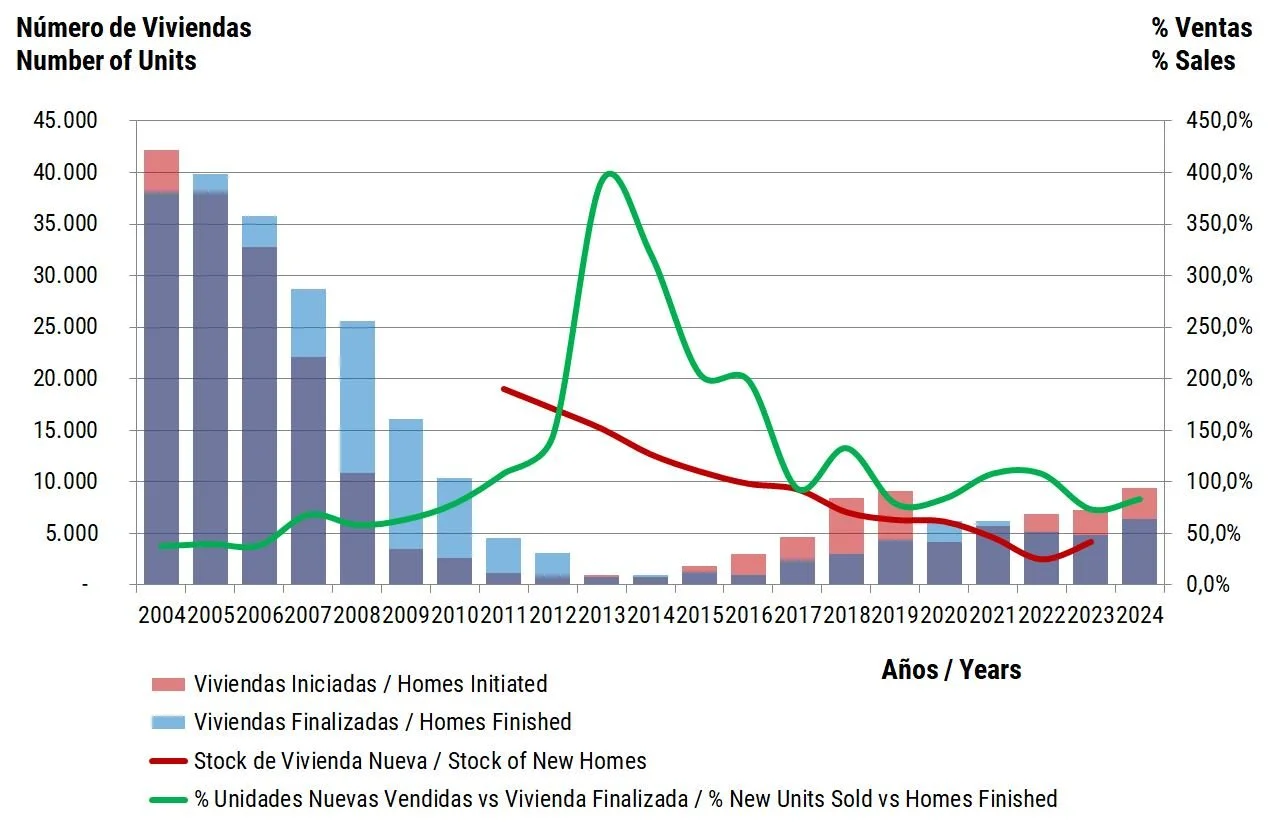
1. Stock of New Homes Remains Historically Low: The red line in the chart represents the stock of newly built homes available on the market. After peaking during the 2008 crisis, that stock has steadily decreased. In 2024, the stock remains well below pre-crisis levels, despite a moderate recovery in construction activity. This is a key difference compared to the 2004–2007 bubble years, when oversupply became a systemic risk.

2. Construction Has Not Returned to Boom Levels: The number of homes being completed (blue bars) and initiated (red bars) in 2024 is still a fraction of the peak seen in 2005. Back then, over 40,000 units were finished in one year, and even 83.000 in 2003. In contrast, 2024 barely reaches a quarter of that. Developers today are more cautious, and financing is stricter—good news for market stability, but a bottleneck for supply.

GRÁFICO 1 - OBRA NUEVA TERMINADA FRENTE A VENDIDA – MALAGA

“We are in a market deïfned by low inventory, contro-lled construction, and sustained demand."

3. Sales Continue to Outpace Deliveries: The green line in the chart—showing the % of new units sold vs. units finished—remains close to or above 100% in recent years. This means more homes are being sold than delivered, reducing available inventory. This dynamic fuels competition for high-quality properties, especially in prime areas like Marbella and Benahavís.

4. Price Pressure is Inevitable: With demand exceeding supply, prices for new builds continue to rise. As highlighted in my June 2024 newsletter, new developments in Marbella have seen average annual price increases of 17.9% over the past three years. This contrasts with second-hand properties, which have grown at 9.2% per year. Investors seeking capital appreciation and lifestyle buyers prioritizing quality are driving this upward trend.

In summary, we’re not witnessing a 2008-style bubble—far from it. Instead, we are in a market defined by low inventory, controlled construction, and sustained demand. For those considering a purchase or investment, especially in sought-after areas like Marbella and Bena-havis, understanding these trends is crucial. The best opportunities are being snapped up quickly and at increasingly higher prices.

Article by:

Alfonso Lacruz

El Mercado de la Obra Nueva en Málaga en 2024: La demanda supera la oferta

Las últimas cifras del Ministerio de Transportes para 2024 confirman una tendencia que vengo señalando en los últimos dos años: aunque la demanda de viviendas de obra nueva sigue siendo muy fuerte en la provincia de Málaga, la construcción sigue sin alcanzar el ritmo necesario, lo que aumenta la presión sobre la oferta y los precios. Veamos qué nos dicen los datos y por qué esto es relevante para compradores, inversores y propietarios.

1.  El stock de viviendas nuevas sigue en mínimos históricos: La línea roja del gráfico representa el stock de viviendas de obra nueva disponibles en el mercado. Tras el máximo alcanzado durante la crisis de 2008, ese stock ha disminuido de forma constante. En 2024, se mantiene muy por debajo de los niveles previos a la crisis, a pesar de una recuperación moderada de la actividad constructora. Esta es una diferencia clave respecto a los años de burbuja 2004–2007, cuando el exceso de oferta se convirtió en un riesgo sistémico.

2. La construcción no ha vuelto a los niveles del boom: El número de viviendas terminadas (barras azules) e iniciadas (barras rojas) en 2024 sigue siendo solo una fracción del máximo alcanzado en 2005. Entonces, se terminaron más de 40.000 unidades en un solo año. En contraste, en 2024 apenas llegamos a una cuarta parte de esa cifra. Los promotores hoy son más prudentes y la financiación es más estricta, algo positivo para la estabilidad del mercado, pero un cuello de botella para la oferta.

GRÁFICO 1 - OBRA NUEVA TERMINADA FRENTE A VENDIDA – MALAGA

“Se trata de un mercado definido por baja oferta, construcción controlada y demanda sostenida.”

3. Las ventas siguen superando a las entregas: La línea verde del gráfico, que muestra el % de viviendas nuevas vendidas frente a las terminadas, sigue cerca o por encima del 100% en los últimos años. Esto significa que se venden más viviendas de las que se entregan, reduciendo el inventario disponible. Esta dinámica genera competencia por las propiedades de calidad, especialmente en zonas prime como Marbella y Benahavís.

4. La presión sobre los precios es inevitable: Con una demanda que supera a la oferta, los precios de la obra nueva siguen en aumento. Como destacaba en mi newsletter de junio de 2024, las nuevas promociones en Marbella han registrado incrementos medios anuales del 17,9% en los últimos tres años. En comparación, las viviendas de segunda mano han subido un 9,2% anual. Los inversores que buscan plusvalía y los compradores que priorizan calidad están impul-sando esta tendencia al alza.

En resumen, no estamos ante una burbuja como la de 2008, ni mucho menos. Se trata de un mercado definido por baja oferta, construcción controlada y demanda sostenida. Para quienes estén pensando en comprar o invertir, especialmente en zonas tan demandadas como Marbella y Benahavís, comprender estas tendencias es clave. Las mejores oportunidades se ven-den rápido… y cada vez a precios más altos.

Artículo de:

Alfonso Lacruz