

Market Info

Embracing Optimism: Key factors for a positive 2024 Real Estate Market in Marbella & Benahavis

As we initiate this the new year, we have been receiving many inquiries about our outlook for 2024. We have been analyzing the market and are pleased to share our positive perspective based on several key factors:

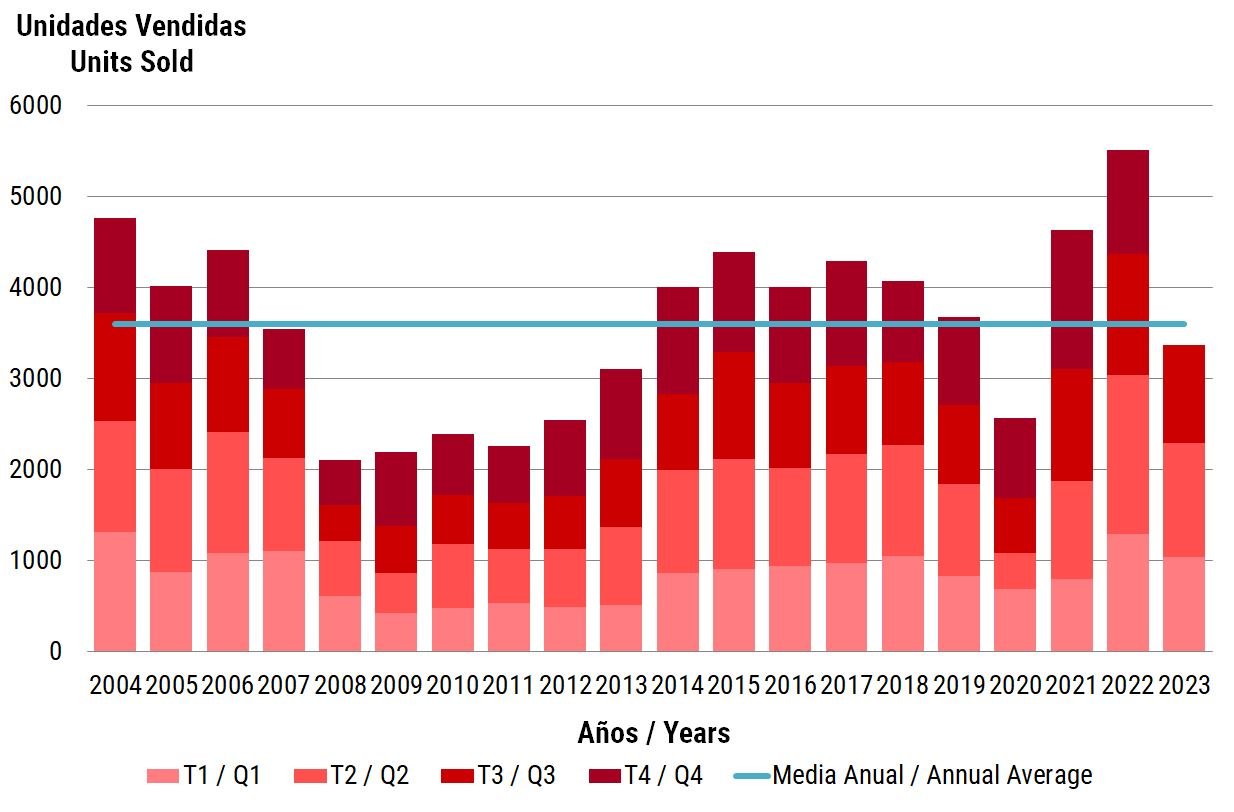
1. Resilient performance in 2023 showing a positive outlook despite transaction decline. Despite a 23.7% decrease in annual closed transactions compared to 2022, 2023 has proven to be a solid year for the real estate market in Marbella. This decline, though significant, should be viewed in context, as it positions 2023 above the average for the past two decades.
 

2. Prices in Marbella and Benahavis show signs of moderation.  In our recent newsletter, we highlighted that second-hand home closing prices are exhibiting a more restrained increase, as indicated by official third-quarter data from 2023. Current information from the real estate portal Idealista from January 2024 asking prices reveals a downward trend in smaller municipalities, while prime locations maintain stability (see info attached for Benahavis).

 This moderation in prices is a positive development, potentially enticing more buyers back into the market.


3. Euribor decline unlocks affordability and signals market positivity. The Euribor mortgage index rate is on a downward trajectory, standing at 3.686% in January 2024 compared to the peak of 4.16% in October 2023. This not only enhances afforda-bility for buyers but also signals a favorable shift in the index, anticipating additional reductions, as predicted by different bank analysts, throughout 2024 and 2025, providing a two-year window with increased acquisition capacity.


4. Anticipated Interest Rate reductions can be a boost for real estate in 2024. Analysts anticipate a reduction in the European Central Bank's official interest rate in June, marking another positive signal for the market. The more moderate inflation rate of 2.8% in January 2024, compared to the double-digit figures at the end of 2022, supports this forecast. Lower interest rates will alleviate mortgage costs and positively impact the real estate market.


5. Affordability metrics are weathering challenges in the Spanish real estate landscape. Despite a 2.25% increase in the affordability rate in Spain over the past two years, it remains at 33%, still 1% below the average of the last two decades. While rising prices and interest rates have had some impact, it is not anticipated to significantly affect the market, particularly the high-end segment on the Costa del Sol.


6. Steady inventory maintains equilibrium in Marbella & Benahavis. The inventory remains balanced and relatively low. Although price increases may push off some buyers, the limited supply of properties will likely prevent significant price declines, contributing to a stable market.


In summary, our optimism for the Marbella & Benahavis real estate market in 2024 is grounded in these positive indicators. Despite geopolitical uncertainties, including conflicts in Ukraine and Gaza and U.S. elections, we believe that the market, supported by the factors mentioned above, will exhibit resilience. Notably, our January activities have shown moderate engagement, defying the typical quietness associated with this time of year.


Entendiendo la Tendencia de los precios en Marbella y Benahavís con los datos del Tercer Trimestre de 2023

En diciembre de 2023 se publicaron los datos oficiales del tercer trimestre de 2023 procedentes de los Colegios de Registradores de la Propiedad y del Notariado que revelan que los precios de la vivienda siguen con su trayectoria ascendente. En los Gráficos 1 y 2 se ha combinado esta información con la variación de los precios de salida del portal inmobiliario Idealista para extraer algunas conclusiones relevantes:

1.- Crecimiento sostenido de los precios: Cabe destacar que los precios de la vivienda siguen en trayectoria ascendente manteniendo un significativo crecimiento de dos dígitos y alcanzando una variación interanual de un 13%. Este crecimiento, como se muestra en los gráficos, se observa en los tres precios diferentes que se publican: precio de salida, precio de cierre y precio de tasación. Esta trayectoria ascendente que se mantiene desde 2014 ha experimentado una aceleración más pronunciada desde 2022 en Marbella y un ascenso sostenido en Benahavís.

2.- Tendencia continua: Aunque aún no se han publicado todavía los datos oficiales al cierre del año 2023 (previstos para marzo de 2024), los precios de salida publicados por el portal Idealista indican que se mantiene el ritmo de crecimiento de los precios en línea con los meses anteriores a pesar de que, aun sin tener datos, se palpó una desaceleración en el mercado durante el último trimestre de 2023.

3.- Persistencia de la Brecha entre Precios de Salida y Precios de Cierre: La discrepancia entre los precios de salida y los de cierre sigue siendo importante. En Marbella, esta brecha alcanzó máximos históricos en 2022, rondando el 20%, y persiste, indicando que el sobreprecio medio actual de las propiedades en el mercado se mantiene en ese nivel. En Benahavís, se observa un patrón similar, con una diferencia muy parecida a la de Marbella, alcanzando un máximo cercano al 24% en 2022 y situándose actualmente en un nivel más moderado pero aún notable, en el entorno del 17%.

4.- Preferencia por la Obra Nueva: La diferencia entre los precios de cierre de las unidades nuevas y las viviendas de segunda mano destaca la clara inclinación hacia las propiedades de nueva construcción. Tanto los precios de las viviendas de obra nueva como los de segunda mano han experimentado un aumento en Marbella y Benahavís, como se muestra en los gráficos 3 y 4 (siguiente página) aunque la tendencia varía entre ambas localidades. En Marbella, se observa un marcado aumento en los precios de obra nueva desde mediados de 2022, mientras que los precios de cierre de las viviendas de segunda mano muestran una tendencia hacia la estabilidad. A principios de 2022, la diferencia era de apenas 500 €/m2, aproximadamente un 15%, mientras que en la actualidad esta brecha se ha ampliado a 2.500 €/m2, lo que supone un notable incremento del 40%. Por otro lado, y en Benahavís, los compradores de obra nueva están pagando un 50% más por metro cuadrado que aquellos que adquieren viviendas de segunda mano. Este desequilibrio se puede atribuir a la preferencia general de los clientes por el producto nuevo, a pesar del sobreprecio que lleva asociado, y a la limitada disponibilidad de nuevas promociones en Benahavís que esta contribuyendo aún más a esta asimetría en el mercado.


Teniendo en cuenta el aumento sostenido de los precios, surge claramente una pregunta: ¿Puede mantenerse esta tendencia? Personalmente, creo que el mercado no puede soportar un crecimiento continuo de dos dígitos a lo largo del tiempo. Examinando el mercado inmobiliario estadounidense, que suele preceder al nuestro en aproximadamente un año, experimentó una profunda crisis en 2023, con caídas de precios del 17% en algunas localidades y del 11% de media, junto con un descenso del 40% en las ventas de viviendas de segunda mano. Este colapso se atribuyó principalmente a bajada de la capacidad de compra, ya que los elevados tipos hipotecarios y la escalada de precios expulsaron a muchos compradores del mercado, lo que provocó una reducción de las ventas y la consiguiente caída de los precios.
¿Podríamos llegar a una situación similar en los mercados de Marbella y Benahavís? En este caso, me inclino a creer que no. Los mercados de lujo, como el que nos ocupa, son menos susceptibles a las subidas de los tipos de interés hipotecarios, y el inventario sigue siendo bajo. Examinando el mercado inmobiliario de lujo en EE.UU. se observa un mercado más normalizado, con un número similar de viviendas vendidas y un aumento del 3% en los precios. Por lo tanto, se debería ir hacía un mercado más normal en términos de ventas de viviendas y aumentos de precios, ya que no hacerlo puede seguir disuadiendo a compradores potenciales. En resumen, aun reconociendo la normalización actual del mercado, soy de la opinión de que el continuo aumento de los precios puede no ser sostenible durante mucho más tiempo, ya que corre el riesgo de desestabilizar el mercado.

Evolución en 2023 del Sector Inmobiliario de lujo de Marbella y Benahavís

En medio de la desaceleración general experimentada en el mercado inmobiliario de Marbella y Benahavís en 2023, marcada por una significativa disminución del 26% en el número total de viviendas vendidas, surge la pregunta de cómo esta desaceleración afecta al segmento de las propiedades de lujo, definidas aquí como aquellas valoradas en un millón de euros o más.

Los Gráficos 1 y 2 presentan el número de propiedades vendidas en varios tramos de precios y la proporción de ventas en el mercado de lujo en comparación con el número total de propiedades vendidas tanto en Marbella como en Benahavís. Estos datos revelan aspectos interesantes que merecen ser destacados:


1.- Ralentización paralela en el segmento de lujo: El mercado de lujo refleja la tendencia general, experimentando una caída significativa del 26% en Marbella y un descenso aún más pronunciado del 30% en Benahavís. A pesar de esto, se observa un atisbo de resistencia, especialmente en los niveles más altos del mercado y en Marbella, abarcando propiedades valoradas en cuatro millones de euros o más, que han experimentado un impresionante aumento del 18% en las ventas. Esto sugiere cierto grado de independencia de los desafíos del mercado en este segmento exclusivo.  


2.- Sólido crecimiento del mercado del lujo: Incluso en medio de la desaceleración general del mercado, el segmento de lujo ha demostrado un crecimiento notable. El gráfico de los seis primeros meses de 2023 revela cifras de ventas que superan las registradas en años enteros de 2017 a 2020. Esta trayectoria ascendente en los últimos tres años señala la fortaleza y viabilidad duraderas del mercado inmobiliario de lujo en la región.


3.- Porcentaje ascendente de ventas de lujo en Marbella: Marbella continúa consolidando su presencia en el mercado de lujo, con el porcentaje de ventas en constante aumento. Este año, la cifra aumentó un 1% adicional, alcanzando un impresionante 13,2% del mercado global. En seis años, el porcentaje se ha duplicado, subiendo desde el 6,6% en 2017, lo que demuestra el sólido crecimiento que este segmento sigue exhibiendo.


4.- Tendencias dinámicas en Benahavís: Mientras que Benahavís muestra un patrón más fluctuante en los cambios porcentuales, hay una trayectoria ascendente general, con un notable aumento del 60% en los últimos seis años. La duplicación del porcentaje en la franja de precios más alta refleja la misma tendencia observada en Marbella.


5.- Atractivo distintivo de Benahavís: Cabe destacar la disparidad sustancial en el porcentaje de ventas de lujo en Benahavís en comparación con Marbella, especialmente por encima del umbral de los cuatro millones de euros. Benahavís supera sistemáticamente a Marbella en este segmento, consolidando su posición como destino codiciado por personas de alto poder adquisitivo. Esta tendencia ha contribuido a que Benahavís se haya ganado la distinción de ser el municipio más rico per cápita de Andalucía.


En resumen, el mercado inmobiliario del lujo en Marbella y Benahavís, aunque no es inmune a los retos del mercado en general, muestra una resistencia y un impulso cultivados en los últimos años. El atractivo de estas propiedades exclusivas persiste, prometiendo una trayectoria continua de éxito frente a la evolución de la dinámica del mercado.

Navigating market dynamics: Insights into 2023 Marbella & Benahavis Luxury Real Estate

In the midst of a broader slowdown in the real estate markets of Marbella and Benahavis throughout 2023, marked by a notable 26% decline in the overall number of homes sold, one question looms large, how is this downturn affecting the exclusive realm of luxury properties, defined here as those valued at one million euros and above?

Within Charts 1 and 2, the volume of closed units across various price brackets and the proportion of sales within the upscale market is showcased versus the overall number of properties sold in both Marbella and Benahavis. These charts unveil compelling insights:


1.- Parallel Slowdown in Luxury Segment: The luxury market mirrors the broader trend, experiencing a significant 26% dip in Marbella and a more pronounced 30% decrease in Benahavis. Despite this, there's a glimmer of resilience. Notably, the highest levels in Marbella, encompassing properties valued at four million euros and above, have witnessed an impressive 18% uptick in sales, suggesting a degree of insulation from prevailing market challenges.


2.- Robust Growth in Luxury Market: Even amid the general market slowdown, the luxury segment has demonstrated remarkable growth. Charting the first six months of 2023 reveals sales figures surpassing those recorded for entire years from 2017 to 2020. This upward trajectory over the past three years signals the enduring strength and viability of the luxury real estate market in the region.


3.- Ascending Percentage of Luxury Sales in Marbella: Marbella continues its ascent in the luxury market, with the percentage of sales steadily climbing. This year, the figure increased by an additional 1%, reaching an impressive 13.2% of the overall market. Within six years, the percentage has doubled, surging from 6.6% in 2017, attesting to the robust growth this segment continues to exhibit.


 4.- Dynamic Trends in Benahavis: While Benahavis exhibits a more fluctuating pattern in percentage shifts, there is an overarching upward trajectory, with a notable 60% increase over the past six years. The doubling of the percentage within the highest price bracket mirrors the trend observed in Marbella.


5.- Distinctive Appeal of Benahavis: Noteworthy is the substantial disparity in the percentage of luxury sales in Benahavis compared to Marbella, particularly beyond the four million euros threshold. Benahavis consistently outpaces Marbella in this segment, solidifying its standing as a coveted destination for wealthy individuals. This trend has contributed to Benahavis earning the distinction of being the richest municipality per capita in Andalucia.


  In summary, the luxury real estate market in Marbella and Benahavis, while not immune to the broader market challenges, it exhibits a resilience and momentum cultivated over recent years. The allure of these exclusive properties persists, promising a continued trajectory of success in the face of evolving market dynamics.

Marbella and Benahavis Real Estate Trends 2023: Unpacking Q2 Home Sales Insights

In the latest report from the Ministry of Housing, the numbers are in for home sales in the second quarter of 2023, and they reveal a notable 26% decrease in closed transactions for both Marbella and Benahavis. Naturally, this may raise some questions about the state of the real estate market in these areas. Let's break down the key insights:


1.- Interpreting the Numbers: A 26% decline in closed sales might appear substantial, but its significance becomes clearer when we consider the context. We're comparing these figures to the exceptional year of 2022 when historical records for home sales were set. In that extraordinary year, we witnessed an impressive surge, with Marbella's sales soaring by +53% and Benahavis by an astonishing +91% above the average annual transaction count in these regions. While these percentage drops are significant, it's important to note that the first half of 2023 still ranks as the second or third best first half in the real estate history of Marbella and Benahavis. This suggests that while 2023 might not match the remarkable performance of 2022, the real estate market in these municipalities maintains a healthy level of activity.


2.- Looking Ahead: A crucial question arises: Will this trend continue? It's true that we are currently experiencing a cooling in the demand for properties, possibly due to global uncertainties and rising interest rates. However, it's important to remember that Marbella, Benahavis, and the entire Costa del Sol remain highly sought-after destinations in Europe, thanks to their exceptional lifestyle offerings. So, despite a temporary dip in property demand, we anticipate a resurgence in demand once the global situation stabilizes and improves.


3.- Distinguishing Trends: An interesting nuance can be observed in the sales of new versus second-hand properties. In Marbella, the primary drop in closings is affecting the sale of new builds, accounting for 8% of sales, and seeing a notable 73% decrease. In contrast, Benahavis is experiencing a 40% increase in the sales of new units, while sales of second-hand properties have decreased more significantly, by 32,7%.


In summary, although there is a 26% decline in home sales, the real estate market in Marbella and Benahavis remains active. The first half of 2023 is still among the top-performing first halves in the history of these municipalities. The second half of the year, which we expect may show more cooling, will ultimately determine how 2023 concludes. Despite current challenges, the outlook for future years remains positive.


Tendencias Inmobiliarias en Marbella y Benahavís 2023: Análisis de las ventas en el segundo trimestre

Según los últimos datos proporcionados por el Ministerio de Fomento, las cifras de ventas de viviendas en el segundo trimestre de 2023 revelan un notable descenso del 26% en las transacciones cerradas tanto en Marbella como en Benahavís. Naturalmente, esto puede plantear algunas dudas sobre el estado del mercado en estos municipios por lo que se van a desglosar algunos puntos clave:

1.- Interpretar los números: Un descenso del 26% en la venta de viviendas puede parecer sustancial pero todo depende del contexto en el que se analice dicho número. Lo primero es entender que se están comparando estas cifras con las del año 2022 en el que se batieron récords históricos de ventas cerradas y en el que se produjo un aumento espectacular en las ventas al dispararse en un +53% en Marbella y en un increíble +91% en Benahavís respecto a la media anual de transacciones cerradas en dichas poblaciones. Si bien las caídas porcentuales del 26% son significativas, es importante señalar que, aun así, el primer semestre de 2023 se sitúa como el segundo o tercer mejor primer semestre en la historia inmobiliaria de Marbella y Benahavís. Esto sugiere que, si bien 2023 podría no igualar los resultados de 2022, el mercado inmobiliario en estos municipios sigue activo.


2.- De cara al futuro: De entrada se plantea una cuestión crucial: ¿Continuará esta tendencia? Aunque es cierto que actualmente se está experimentando un enfriamiento en la demanda de propiedades posiblemente debido a las incertidumbres geopolíticas y al aumento de los tipos de interés, es importante recordar que Marbella, Benahavís y toda la Costa del Sol siguen siendo destinos muy solicitados en Europa, gracias a su excepcional oferta residencial y de ocio siempre acompañada por un clima inigualable. Así que, a pesar de una caída temporal en la demanda inmobiliaria, se prevé un resurgimiento de la demanda una vez que la situación mundial se estabilice y mejore.

3.- Tendencias diferenciadas: Se observa un matiz interesante en las ventas de propiedades nuevas frente a las de segunda mano. En Marbella, la principal caída en las transacciones ha afectado a la venta de obra nueva, que representa el 8% de los cierres, y que experimenta un notable descenso del 73%. Por el contrario, Benahavís ha experimentado un aumento del 40% en las ventas de unidades de obra nueva, mientras que las ventas de propiedades de segunda mano han disminuido un significativo 32,7%.

En resumen, aunque se registra un descenso del 26% en el número de viviendas vendidas, las perspectivas del mercado inmobiliario de Marbella y Benahavís, a pesar de los retos actuales, siguen siendo positivas.


Análisis de las ventas en el segundo trimestre en Marbella y Benahavís

Según los últimos datos proporcionados por el Ministerio de Fomento, las cifras de ventas de viviendas en el segundo trimestre de 2023 revelan un notable descenso del 26% en las transacciones cerradas tanto en Marbella como en Benahavís. Naturalmente, esto puede plantear algunas dudas sobre el estado del mercado en estos municipios por lo que se van a desglosar algunos puntos clave:

1.- Interpretar los números: Un descenso del 26% en la venta de viviendas puede parecer sustancial pero todo depende del contexto en el que se analice dicho número. Lo primero es entender que se están comparando estas cifras con las del año 2022 en el que se batieron récords históricos de ventas cerradas y en el que se produjo un aumento espectacular en las ventas al dispararse en un +53% en Marbella y en un increíble +91% en Benahavís respecto a la media anual de transacciones cerradas en dichas poblaciones. Si bien las caídas porcentuales del 26% son significativas, es importante señalar que, aun así, el primer semestre de 2023 se sitúa como el segundo o tercer mejor primer semestre en la historia inmobiliaria de Marbella y Benahavís. Esto sugiere que, si bien 2023 podría no igualar los resultados de 2022, el mercado inmobiliario en estos municipios sigue activo.

2.- De cara al futuro: De entrada se plantea una cuestión crucial: ¿Continuará esta tendencia? Aunque es cierto que actualmente se está experimentando un enfriamiento en la demanda de propiedades posiblemente debido a las incertidumbres geopolíticas y al aumento de los tipos de interés, es importante recordar que Marbella, Benahavís y toda la Costa del Sol siguen siendo destinos muy solicitados en Europa, gracias a su excepcional oferta residencial y de ocio siempre acompañada por un clima inigualable. Así que, a pesar de una caída temporal en la demanda inmobiliaria, se prevé un resurgimiento de la demanda una vez que la situación mundial se estabilice y mejore.

3.- Tendencias diferenciadas: Se observa un matiz interesante en las ventas de propiedades nuevas frente a las de segunda mano. En Marbella, la principal caída en las transacciones ha afectado a la venta de obra nueva, que representa el 8% de los cierres, y que experimenta un notable descenso del 73%. Por el contrario, Benahavís ha experimentado un aumento del 40% en las ventas de unidades de obra nueva, mientras que las ventas de propiedades de segunda mano han disminuido un significativo 32,7%.


En resumen, aunque se registra un descenso del 26% en el número de viviendas vendidas, las perspectivas del mercado inmobiliario de Marbella y Benahavís, a pesar de los retos actuales, siguen siendo positivas.

Is it worth investing in Marbella´s Real Estate?

I would say, it depends on various factors including the type of asset, the specific property, and the timing of the investment. The primary aim of this article is not to delve into an exhaustive analysis of each real estate asset category as the returns may change for the different options flipping, land development, distressed properties, etc. For instance, land investments often demand more time, whereas distressed properties might yield higher profits, particularly from a short-term perspective where timing is crucial. Investors who ventured into Marbella's real estate market in 2001 or 2013 arguably reaped substantial returns, while those who entered in 2007 faced losses instead of gains. The core idea is to approach real estate investments from a long-term standpoint that is less susceptible to market volatility.

Initially, two primary sources of profit are linked to real estate: income derived from rentals, whether for holidays or long-term leasing, and the appreciation of real estate values, i.e., price increases. Profitability arises from the combination of these two elements.

When examining Chart 1, which illustrates Spain's home profitability (in red) alongside Gross Rental Profitability (in blue) and real estate market price fluctuations (in green), one can discern that the past two decades featured periods of loss, such as 2012, as well as periods of substantial returns, notably from 2001 to 2005, averaging around 17% per annum.

The first component, Gross Rental Profitability, exhibits less volatility than home prices and has remained relatively stable over the past decade, hovering at approximately 4%. Between 2001 and 2013, it experienced more fluctuations but still maintained an average of 3.8%. Taking a 20-year perspective, the overall average stands at 3.9%. However, these percentages pertain to Gross Rental Profitability. But what about Net Rental Income? To obtain the Net figure, operating and maintenance costs must be subtracted, which is estimated at an average of 1.9% of the gross profit. Consequently, the yearly average Net Rental Income is roughly 2%.

The second component, the increase in Marbella's home prices, is summarized in Chart 2. Here, it's observable that the average annual increase over the past two decades stands at 3.5%. There were years marked by substantial price hikes, such as the period from 2001 to 2007, as well as years with price declines, occurring between 2009 and 2013. The current The question then arises: can this be regarded as a sound investment?

Once again, the answer depends on the yardstick used for comparison. Let's explore various investment options to determine where real estate in Marbella stands, as depicted in Chart 4, illustrating the average 20-year trends.

Chart 4 presents a comprehensive view of seven distinct investment assets, showcasing their average annual 20-year returns on investment. Notably, the stock market, particularly the US stock market, emerges as the top performer in long-term returns, followed closely by gold. Bonds, cash, and commodities, on the other hand, offer returns of below 3% on a yearly long-term basis. It's worth noting that there are alternative investments, like cryptocurrencies, that may yield higher returns, but they come with substantial volatility and associated risks. As the adage goes, higher risks can lead to higher returns, but this isn't the kind of investment we aimed to compare with.

To summarize, long-term investing in real estate in Marbella is poised to deliver an average yearly return of 5.5%, a rate that proves quite appealing for a moderate-profile, long-term investor. It's also attractive for individuals who view their property acquisition primarily as a means to relish the high quality of life Marbella has to offer but are mindful that, over the long haul, it can also serve as a sound investment.


CHART 3 - THE LUXURY HOME PRICES IN MARBELLA

CHART 4 - THE LUXURY HOME PRICES IN BENAHAVIS